Remote and hybrid hiring are permanent features of the modern workplace. As organizations expand across locations and even time zones, the employee onboarding process has had to evolve. However, onboarding is harder to manage remotely because of reduced visibility, fragmented communication, and limited real-time oversight. Employee work is less visible in remote environments, which means HR and managers cannot easily observe progress, engagement, or confusion. Communication between trainer and trainee can also be more complex, especially when onboarding materials are spread across different systems.
In a remote setting, informal guidance disappears. Without structure, onboarding becomes inconsistent. An effective remote employee onboarding process includes a clearly documented framework, centralized access to training materials, role-specific learning paths, and measurable milestones. It is structured enough to ensure consistency but flexible enough to support different roles and departments. In remote environments, structure and systems matter more than ever because they replace the visibility and informal support that exist in physical offices.
What actually makes remote onboarding successful is not more meetings or more documents, it is a system that standardizes delivery while supporting employees in real time. A scalable employee onboarding process is built around structure rather than individual effort. Effective remote onboarding includes centralized onboarding workflows, role-specific learning paths, embedded compliance training, and clear milestones that indicate readiness rather than mere completion. Centralized onboarding content enables clarity and scale, and it ensures every new hire receives the same foundation while allowing HR teams to maintain governance and visibility.
Common Challenges New Hires Face During Remote Onboarding
Even well-designed onboarding programs can feel overwhelming from the employee perspective.
In the first weeks, new hires often experience information overload. They are introduced to policies, tools, teams, processes, and expectations all at once. In remote settings, they may not know where to find important documents, how to access systems, or who to contact for specific questions.
Unclear expectations create additional friction. When onboarding steps are not clearly structured, employees may wonder what they should prioritize or whether they are progressing as expected. Delays also occur when new hires must wait for HR or managers to respond to routine questions.
These challenges are not caused by lack of effort, they are symptoms of gaps in the employee onboarding process. Without a centralized system to guide and support new hires, small uncertainties accumulate into larger productivity delays.
What a Good Onboarding Process Looks Like for Remote Teams
A strong employee onboarding process removes ambiguity.
When onboarding is unclear or undocumented, new hires rely heavily on managers for direction. This increases interruptions and creates inconsistencies across teams. In contrast, a documented, step-by-step onboarding process provides structure from day one.
For remote teams, this structure must include:
- Clearly defined onboarding stages
- Role-specific learning pathways
- Integrated compliance training
- Defined milestones that indicate readiness
The difference between ad-hoc onboarding and system-led onboarding is significant. Ad-hoc onboarding depends on individuals remembering what to share. System-led onboarding ensures every employee receives consistent training aligned with company standards.
For HR strategists, this shift improves governance, reduces risk, and strengthens long-term performance.
How AI Can Support the Employee Onboarding Process
Technology plays a critical role in modern remote onboarding, and AI is becoming one of the most practical tools within the employee onboarding process. AI acts as a support layer that reduces interruptions and improves access to information.
How AI Supports Employees
An AI tutor functions as a self-service onboarding assistant. Instead of searching through documents or waiting for responses, new hires can ask questions directly and receive immediate guidance.
AI can:
- Answer common onboarding questions
- Guide employees to the correct documents or resources
- Clarify next steps within the onboarding timeline
- Provide support outside HR working hours
For example, a new hire might ask:
- “Where can I find company policies?”
- “How do I access this system?”
- “What should I complete this week?”
Instead of emailing HR or messaging their manager, they receive instant guidance within the onboarding platform.
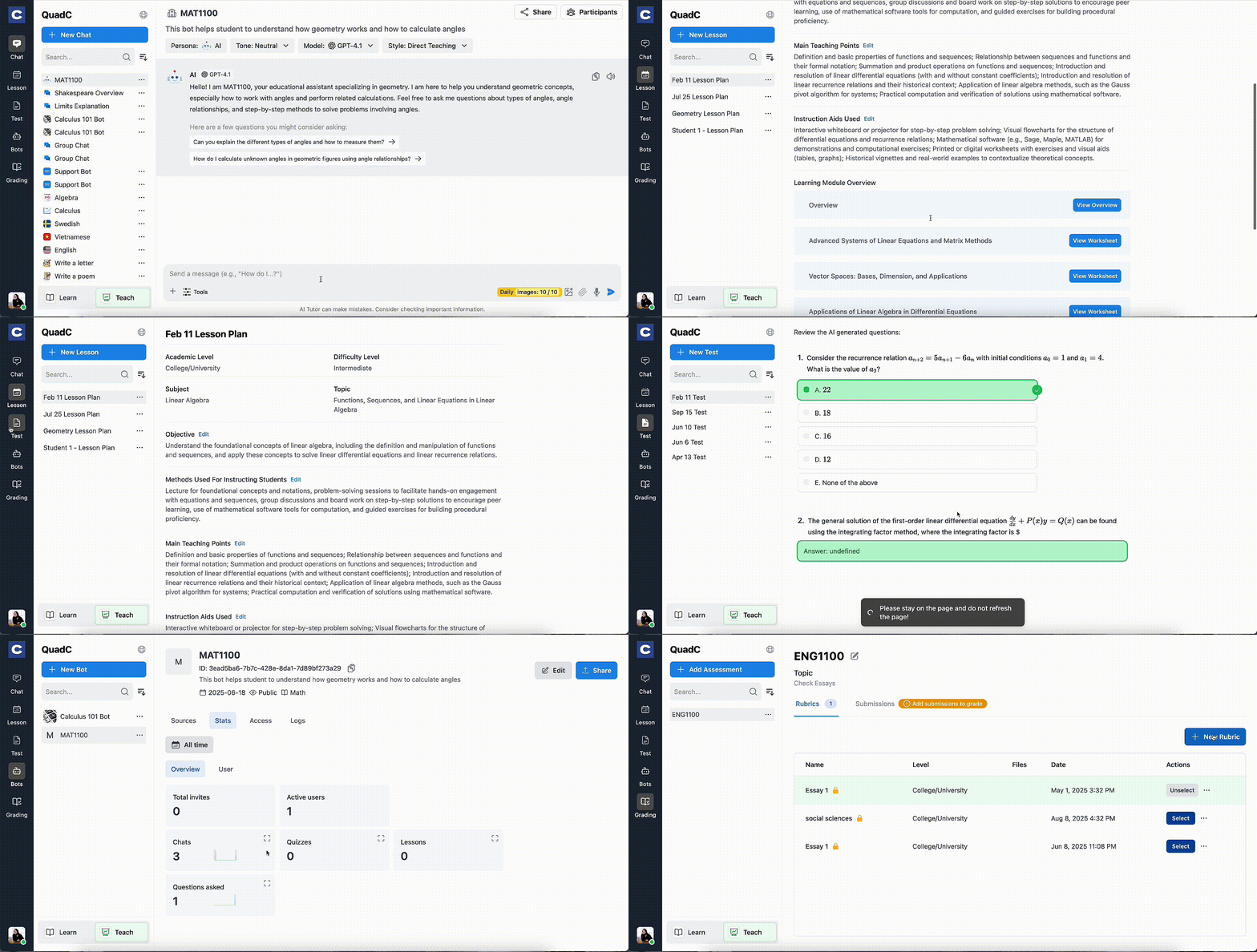
QuadC’s AI Tutor supports structured onboarding by guiding employees through content and answering questions in real time. This ensures employees remain supported while reducing unnecessary back-and-forth communication.
How AI Supports HR and Trainers
AI also strengthens the employee onboarding process from the HR perspective.
HR teams can use AI to help create onboarding plans, structure learning paths, and support workflows. Because employees can ask the AI directly, HR professionals do not need to respond to every routine question individually.
AI-generated insights also allow HR teams to review common questions employees ask during onboarding. This provides visibility into knowledge gaps and helps refine onboarding materials over time.
Instead of personally training every new hire, HR can rely on AI to reinforce standardized training content while maintaining oversight.
QuadC’s AI tutor centralizes onboarding guidance, supports role-based workflows, and provides visibility into employee interactions, strengthening both delivery and governance.
Benefits of Using AI to Improve Remote Employee Onboarding
When AI is integrated into the employee onboarding process, organizations benefit from:
- Faster time-to-productivity, as new hires receive immediate support
- Fewer repetitive HR and manager questions, reducing operational strain
- More consistent onboarding experiences across teams
- Better visibility into onboarding progress and knowledge gaps
- Scalable onboarding without increasing HR workload
For growing organizations, these improvements directly impact performance and retention.
Building a Scalable Employee Onboarding Process
Remote hiring requires a structured, system-driven employee onboarding process. Without visibility and support mechanisms, onboarding becomes inconsistent and difficult to manage at scale.
By combining centralized onboarding workflows with AI-supported guidance, HR teams can deliver consistent, high-quality onboarding experiences while maintaining oversight and reducing manual workload.
AI is not a replacement for HR expertise, it is an enabler. Platforms like QuadC help HR teams strengthen their employee onboarding process by guiding new hires, answering routine questions, and more.
As remote and hybrid work continue to expand, scalable onboarding systems will become a defining factor in organizational success.
FAQ: Employee Onboarding Process
What is an onboarding checklist?
An onboarding checklist is a structured list of tasks and milestones that guide the employee onboarding process from pre-boarding through the first months of employment. It ensures consistency, accountability, and compliance across all new hires.
A strong onboarding checklist typically includes:
- Pre-day-one setup (contracts, system access, equipment)
- Policy and compliance training
- Role-specific training milestones
- Introductions to key stakeholders
- Performance expectations and early goals
For remote teams, a digital onboarding checklist within a centralized platform ensures every step is trackable and standardized.
What is a 30-60-90 day onboarding plan?
A 30-60-90 day plan is a structured framework used in the employee onboarding process to define expectations and milestones during a new hire’s first three months.
- First 30 days: Learning and orientation (company policies, tools, team structure)
- First 60 days: Increased responsibility and skill development
- First 90 days: Measurable contribution and performance alignment
For HR strategists, the 30-60-90 framework transforms onboarding from a one-week event into a measurable performance ramp-up strategy.
AI-powered onboarding systems can reinforce these stages by guiding employees through content aligned to each milestone.
How long should onboarding last?
The employee onboarding process should typically last between 30 and 90 days, depending on role complexity, regulatory requirements, and organizational structure.
However, onboarding should not be confused with orientation. Orientation may last a few days, but true onboarding continues until the employee reaches full productivity and role confidence.
In remote environments, structured onboarding timelines are especially important because informal learning opportunities are limited.
What are common mistakes in the employee onboarding process?
Common onboarding mistakes include:
- Treating onboarding as a one-week event
- Separating compliance training from role training
- Relying entirely on managers for delivery
- Failing to measure time-to-productivity
- Providing information without structured milestones
- Lacking visibility into employee progress
These mistakes often result in slower ramp-up, inconsistent experiences, and increased HR workload.
A centralized, system-led onboarding process reduces these risks.
How can AI help with employee onboarding?
AI supports the employee onboarding process by acting as a real-time, self-service assistant for both employees and HR teams.
For employees, AI can:
- Answer onboarding questions instantly
- Guide them to policies, tools, and documentation
- Clarify next steps in their onboarding journey
- Provide support outside business hours
For HR teams, AI can:
- Reinforce structured onboarding workflows
- Reduce repetitive questions
- Surface common knowledge gaps
- Support scalable onboarding without increasing headcount
Platforms like QuadC integrate AI directly into onboarding environments, allowing organizations to maintain structure while improving accessibility and consistency.
